

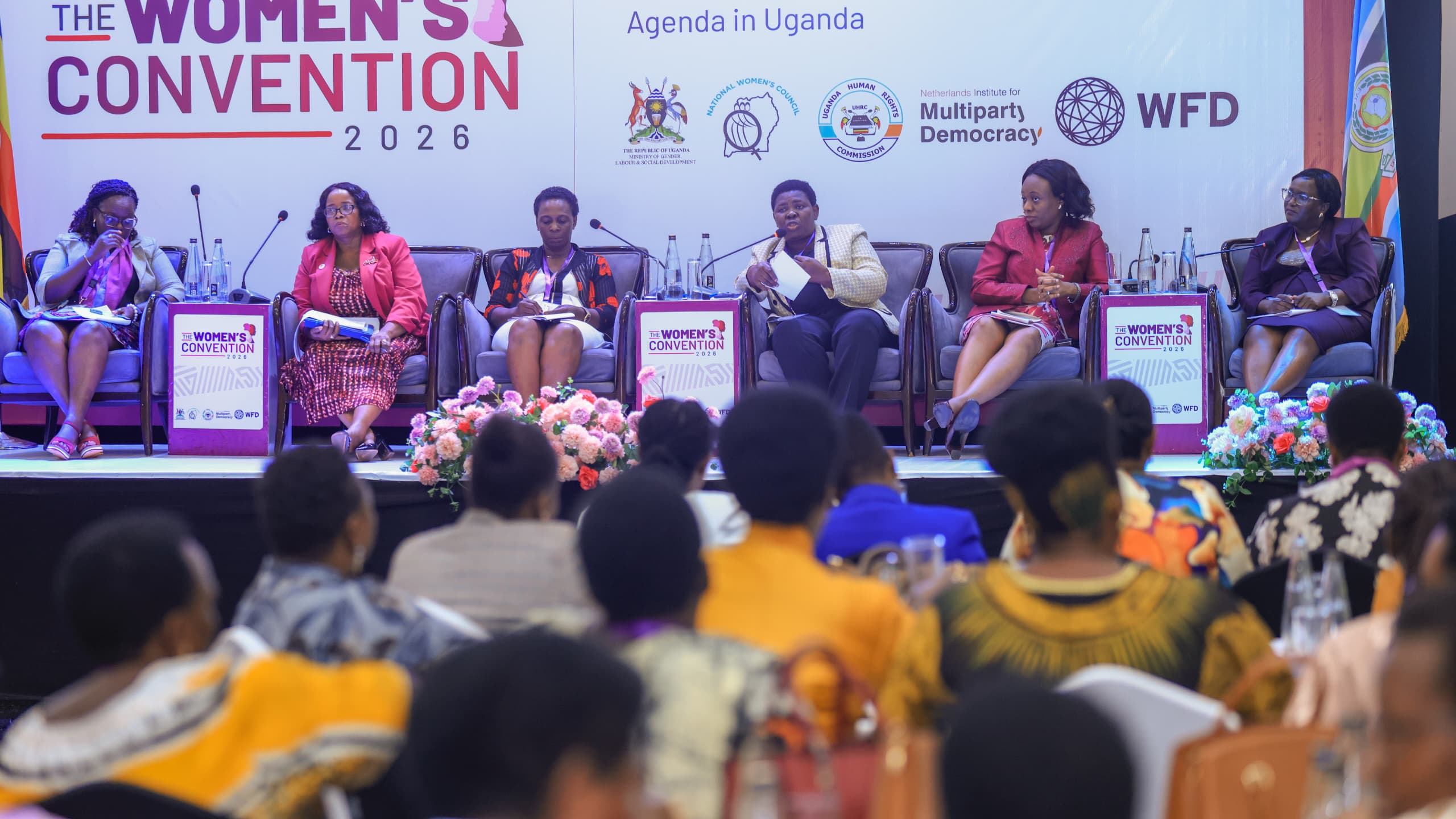
Women leaders across Uganda’s political spectrum have been urged to boldly contest elective positions traditionally dominated by men as the country pushes to deepen women’s participation in leadership and governance.
The call was made by Rose Namayanja, the Deputy Secretary General of the National Resistance Movement (NRM), while addressing delegates at the Women’s Convention 2026 held at Mestil Hotel in Kampala.
Namayanja encouraged women leaders to move beyond relying solely on affirmative action seats and instead directly compete with men for constituency-based political positions.
“Affirmative action policies have played an important role as entry points for women into leadership,” Namayanja said.
“However, the next step for the women’s agenda is for women to confidently contest elective positions and compete on equal footing with men.”
The convention, organised by the Ministry of Gender, Labour and Social Development under the theme “Reflecting on the Past, Strengthening the Present and Shaping the Future of the Women’s Agenda in Uganda,” brought together women leaders, policymakers and civil society actors to assess progress in gender equality and leadership.
Namayanja said that although affirmative action has significantly increased women’s representation in governance, its scope remains limited.
“We must strengthen the implementation of gender policies while also positioning ourselves to win competitive elective seats,” she said. “Women should not shy away from contesting against men.”
Her remarks reflect a growing push among women leaders to expand their influence beyond reserved positions such as district women Member of Parliament seats.
Speaking at the same event, Betty Amongi, the Minister of Gender, Labour and Social Development, highlighted government initiatives aimed at empowering women economically and socially.
Amongi cited programmes such as the Women Entrepreneurship Programme, youth livelihood initiatives, the Generating Growth Opportunities and Productivity for Women Enterprises (GROW) project, and the Parish Development Model as key drivers of women’s economic participation.
She noted that the government has made steady progress in improving women’s representation in leadership.
“Women currently hold about 34 percent of Cabinet positions, 45 percent of technical government roles and nearly half of leadership positions across various public institutions,” Amongi said.
The minister also assured participants that the government has mechanisms to monitor and support Ugandan workers abroad, particularly women employed in the Middle East.
She said contingency plans developed with the International Organization for Migration and the Ministry of Foreign Affairs are in place to facilitate safe repatriation when necessary.
Faridah Kibowa, Chairperson of the National Women’s Council, commended development partners for supporting the convention.
These include the Westminster Foundation for Democracy, the Netherlands Institute for Multiparty Democracy and the Canadian Human Rights Commission.
“This gathering provides a critical platform for women leaders from different political backgrounds to evaluate progress in advancing women’s leadership while exploring strategies to expand women’s participation in governance,” Kibowa said.
She added that the National Women’s Council’s structures, from grassroots communities to the national level, ensure that women have opportunities to participate in decision-making processes affecting their lives.
Discussions at the convention are focusing on practical strategies to translate policy commitments into tangible results, particularly by encouraging more women to contest competitive political offices and take a greater role in shaping Uganda’s leadership landscape.
